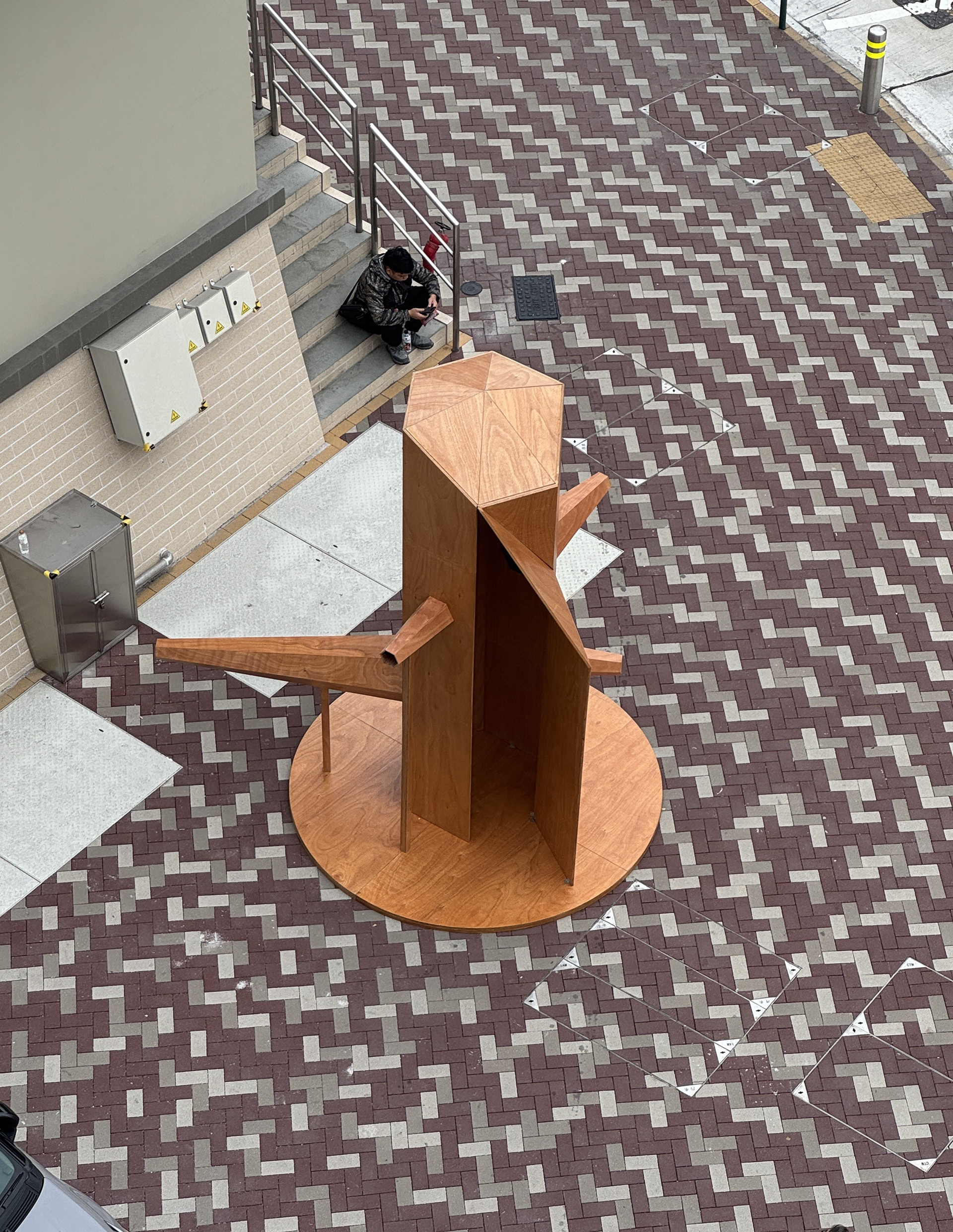
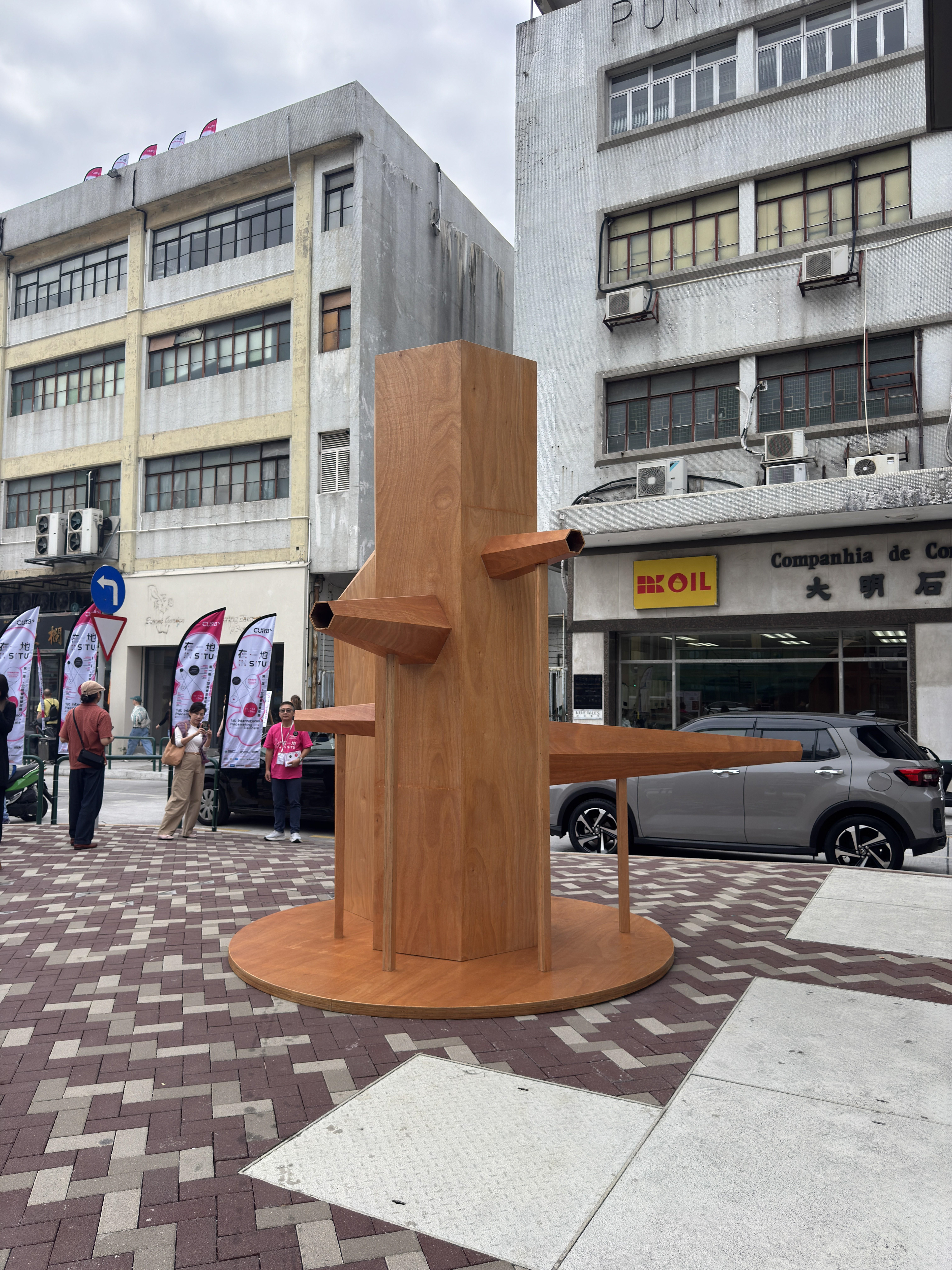
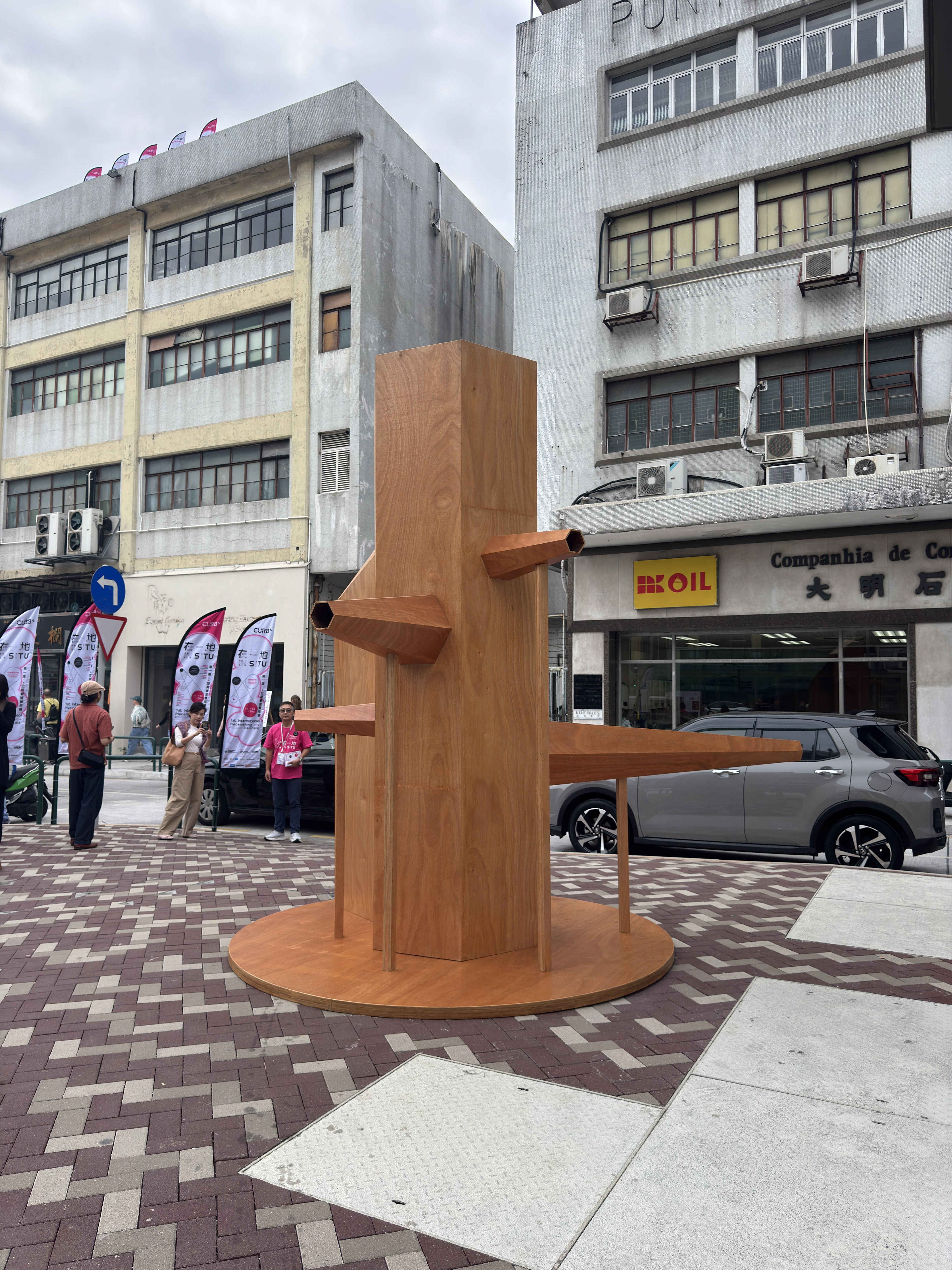
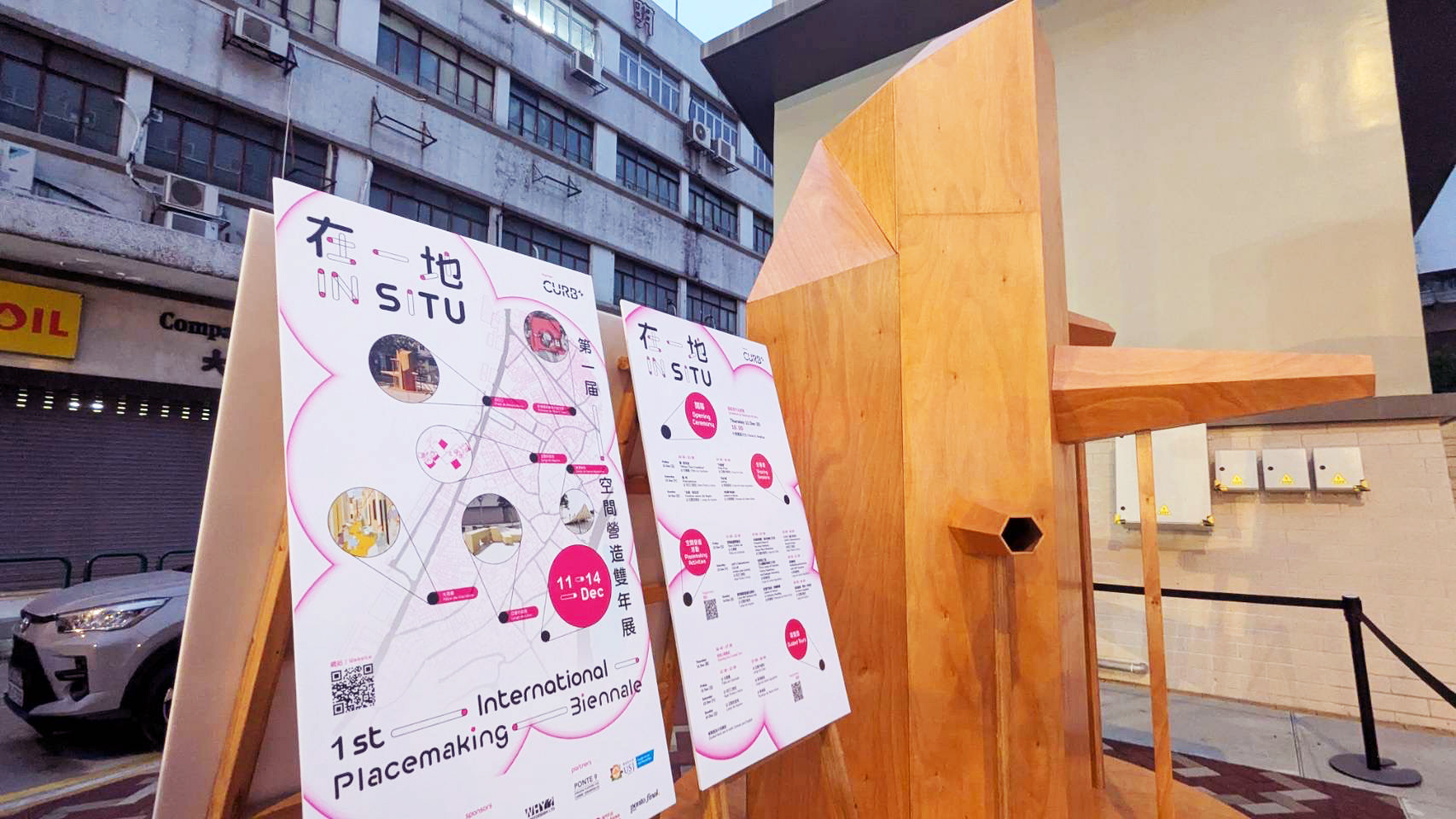
木頭聲音裝置,3m*3m*3m,2025
Wood sound Installation,3m*3m*3m,2025
”Largo”、”Praça”和“Praceta”三個詞語雖然均譯作廣場,但廣場一詞在澳門語境裡屬於新生詞彙,這類空間以往在澳門皆被稱為「前地」,這一詞彙是澳門城市文化中獨特的存在。葡萄牙人定居後,常在教堂前開闢一片空地,隨著時間發展這類被澳門華人稱為「前地」的空地逐漸成為住宅與生活聚落。前地既是市民活動的場所,也成為文化交融的場域,宗教儀式、市民活動和社群記憶在此交織,形成澳門城市肌理的律動與呼吸。
作為一座不斷經歷循環性重建的城市,澳門的樣貌持續在迭代與轉化之中,以一種有機生長的方式延展。每一次空間與地貌的變更,都伴隨著地理與感官層面的變化——風的方向、聲音的流動也隨之不同。我們無法親身經歷那些已經過去的歷史,但試著用聲音再次演繹這個城市已然未然的樂章。
受到教堂內部空間所形成的回聲和聲響作為啟發,以及風順堂前身木造教堂的歷史意象,建構成僅屬於當地過去和現在聲音的共振,作品以木質聲音模組構築成半開放的空間裝置,使結構本身成為共振體。當風與環境聲進入作品,它們會被共鳴管過濾、強化成不同的聲音頻率,互相交融產生隨機而流動的聲響片段,在內部重演和再現這數百年來澳門的文化融合,聽者在空間中聆聽的不只是環境的聲音,也是時間的迴盪。這座裝置以聲音的方式,讓城市的記憶、空氣與文化在此刻產生共鳴。
每一根共鳴管都指向一個具代表性的建築物或區域:風順堂(聖老愣佐堂)是澳門最古老的教堂之一,代表澳門濃厚的宗教文化和影響力;內港碼頭代表澳門18~19世紀作為世界航運重要樞紐的黃金時代;崗頂是澳門保留了傳統葡人集會慶典文化的社區,代表了中葡文化上的交融;新馬路是旅遊打卡熱點,代表著澳門今日的主要行業;而指向海的共鳴管會正放在大部分人頭部的高度,為了讓大家可以看見管中的影像,就是大海和天空,代表著澳門的未來。
*每根管的共振頻率則是直接取用裝置和目標建築物/地點的距離(除了海),例如距離風順堂364米就用364Hz的音高。
When the Portuguese settled in Macau, they often cleared a small open area in front of churches; over time, these spaces, known locally as “前地” gradually evolved into residential and communal neighborhoods. Each Largo served not only as a civic gathering ground but also as a cultural intersection where religious rituals, social activities, and collective memories intertwined—forming the rhythm and breath of Macau’s urban fabric.
Macau as a city that has undergone cycles of reconstruction. Its appearance continuously evolves and transforms, growing organically through time. Each alteration of space and landscape brings with it subtle geographical and sensory shifts—change in winds direction, as well as movement of sound transforms. We now attempt to recompose this city’s symphony through sound.
Inspired by the echoes and reverberations within church interiors, as well as the historical imagery of the wooden chapel that once stood on the site of St. Lawrence’s Church, this work constructs a resonance belonging solely to the site’s past and present. The installation is composed of wooden sound modules, forming a semi-open architectural space, in which the structure itself becomes a resonant body. When wind and environmental sounds enter the work, they are filtered and amplified through resonance pipes into varying frequencies, intertwining to create spontaneous and fluid sonic fragments.
Each resonance pipe is oriented toward a landmark or area of symbolic significance:
St. Lawrence’s Church, one of Macau’s oldest churches, embodies the city’s profound religious culture and influence;the Inner Harbor pier recalls Macau’s golden maritime age of the eighteenth and nineteenth centuries;
Largo de Santo Agostinho neighborhood preserves the traditional Portuguese communal festivities, representing Sino-Portuguese cultural fusion;
Avenida de Almeida Ribeiro signifies today’s tourism industry as the city’s main economic force;and the pipe directed toward the sea—positioned roughly at head height—symbolizes Macau’s future.
The resonance frequency of each pipe corresponds directly to the physical distance between the installation and its referenced site (except for the sea). For example, St. Lawrence’s Church, located 364 meters away, produces a pitch of 364 Hz.
劉家銘、劉安敬共同創作